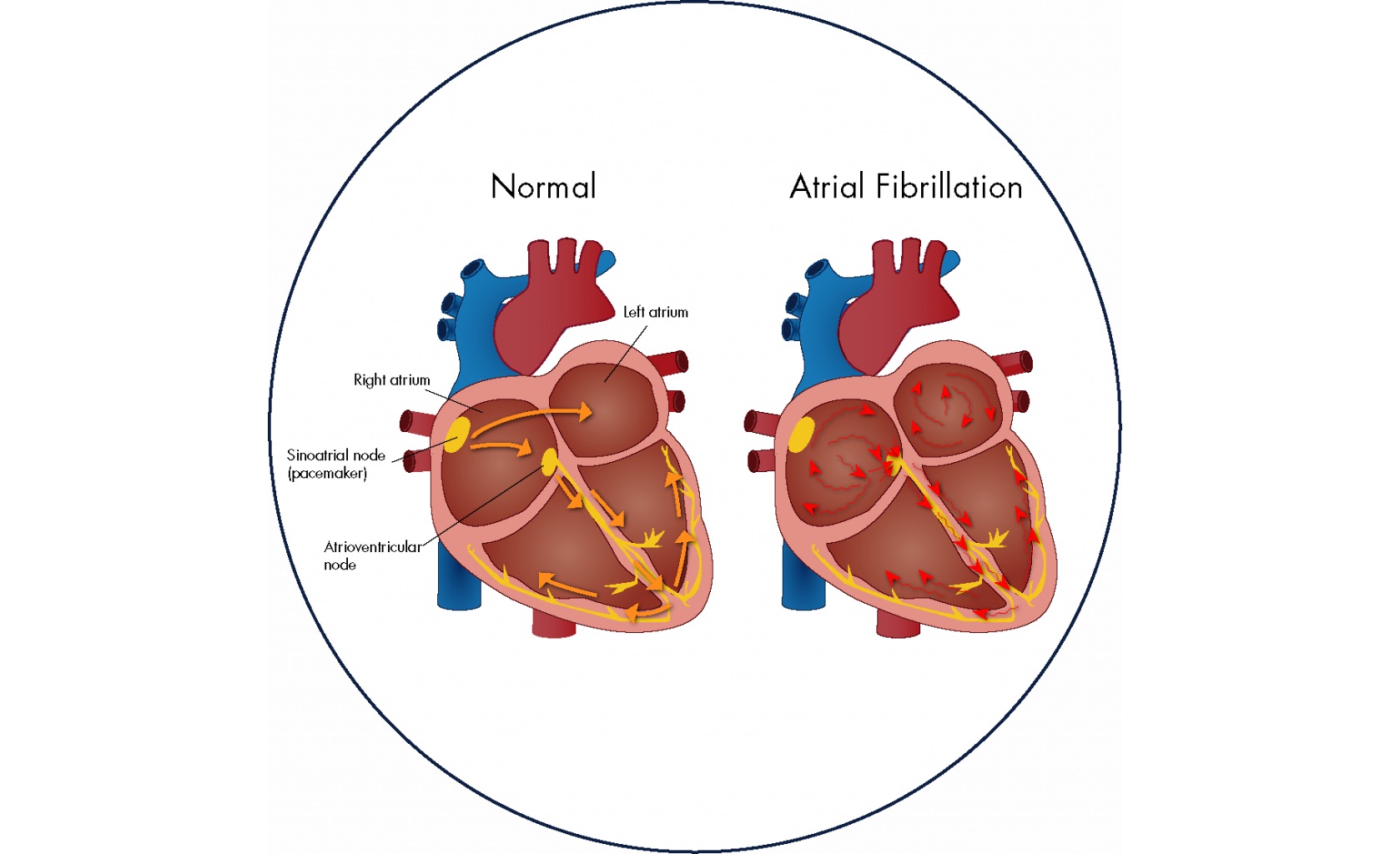
What is atrial fibrillation?
Most of the time, our hearts beat in a steady rhythm—like a reliable drum keeping time. But in atrial fibrillation, that rhythm becomes irregular and sometimes very fast. Instead of a steady beat, the heart may feel like it’s fluttering, pounding, or racing.
AF is the most common type of abnormal heart rhythm (arrhythmia), and millions of people live with it. While it can feel unsettling, the good news is that AF can be managed with proper treatment and lifestyle choices.
What are the symptoms of AF?
Some people notice a racing heart, fluttering in the chest, shortness of breath, dizziness, or fatigue. Others may not feel any symptoms at all.
Why does it matter?
AFib is more than just an irregular heartbeat. It can:
- Increase stroke risk – Because blood may pool in the atria, clots can form. If a clot travels to the brain, it causes a stroke. People with AFib are 5 times more likely to have a stroke.
- Weaken the heart – If the heart beats too fast for too long, it can lead to heart failure.
- Affect daily life – AFib can cause fatigue, limiting normal activities.
How is AF diagnosed?
- Electrocardiogram (ECG) – Detects irregular rhythms.
- Holter monitor or event monitor – Portable devices that record your heart rhythm over time.
- Echocardiogram – Ultrasound test to look at heart structure and function.
- Blood tests – To check thyroid function and other possible triggers.
What are the treatment goals in AF?
- Control the heart’s rhythm or rate (with medication, procedures, or devices).
- Prevent blood clots (with blood thinners when recommended).
- Manage risk factors like elevated body weight
- Manage triggers like high blood pressure, sleep apnoea, or excess alcohol.
Remember:
Having AF doesn’t mean you can’t live a full life. With the right treatment and lifestyle choices, most people with AFib stay active and well.
If you have any concerns, please do not hesitate to book an appointment with one the Consultant Cardiologists at The Berkshire Clinic.