
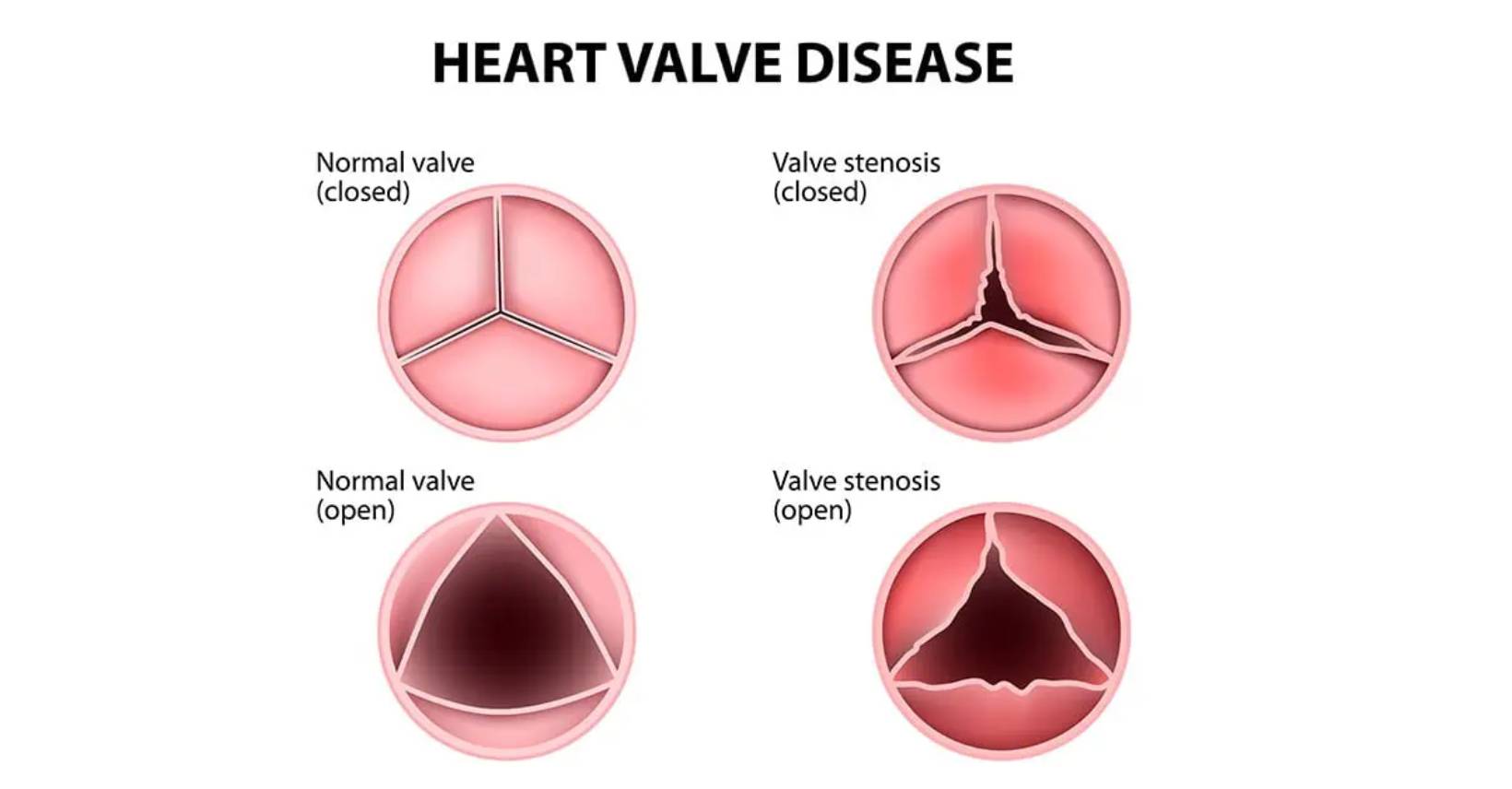
Heart Valve Disease
Published on: August 27, 2025
What is valve disease?
Your heart has four valves that act like ‘doors’, that open close during the course of each heart beat to ensure that blood flows around the heart in the right direction and cardiac function is efficient as possible.
In valve disease these structures these doors don’t open or close the way they should.
Common problems of valve disease:
Stenosis – The valve doesn’t open fully, making it harder for blood to flow through.
Regurgitation (leakage) – The valve doesn’t close properly, letting blood leak backward.
Prolapse – The valve flaps bulge instead of sealing tightly.
What causes valve disease?
- Age-related wear and tear
- Birth defects (congenital valve disease)
- Rheumatic fever (after untreated strep infections)
- Infections of the heart (endocarditis)
- Other heart conditions, like heart attacks or high blood pressure
What are the symptoms of valve disease?
Some people may have no symptoms at first. As disease progresses, you may notice:
- Shortness of breath
- Chest pain or pressure
- Fatigue
- Swelling in ankles or feet
- Dizziness or fainting
- Heart murmur (detected by a doctor’s stethoscope)
In the majority of individuals, there may be no symptoms at all and is diagnosed by the finding of a heart murmur detected by your doctor following a physical examination.
How is valve disease diagnosed?
Tests may include:
- Echocardiogram – Main test, using ultrasound to see valves in action.
- Electrocardiogram (ECG) – Looks for heart rhythm changes.
- Chest X-ray – Checks for an enlarged heart or fluid in the lungs.
- Cardiac MRI or CT scan – For detailed imaging.
What can be done?
- Monitoring – Mild cases may only need regular check-ups.
- Medications – To control symptoms (diuretics for fluid buildup, blood thinners, medications for rhythm).
- Procedures or surgery –
- Valve repair – Fixing the valve without replacing it.
- Valve replacement – Using a mechanical or tissue valve.
- Minimally invasive procedures – Such as TAVI (transcatheter aortic valve implantation) or mTEER (mitral transcatheter edge-to-edge repair).
Remember:
Not everyone with valve disease needs surgery right away. With proper monitoring and timely care, people with valve problems can live active, healthy lives.
If you have any concerns, please do not hesitate to book an appointment with one the Consultant Cardiologists at The Berkshire Clinic.